Most “questions to ask a DJ” lists are written for weddings. If you book a club night, a college show, a brand party or a festival stage, the questions that decide a good booking are different: does this DJ fit your crowd, can they prove it, and will the show run clean from load-in to last track. Here are 12 questions worth asking, grouped the way a talent buyer actually decides.
- Fit: ask what a set for your event sounds like and for something recent you can hear or watch.
- Slot: confirm which slot they play best, the set length and how they hand over to the next DJ.
- Show day: get their booth needs, backup plan and arrival time before the offer is final.
- Deal: fee breakdown, overtime, deposit and cancellation terms in writing.
Fit: will this DJ work for your room?
Fit beats fame. A DJ who is perfect for a 2 a.m. bass house crowd can be wrong for a 9 p.m. campus show. These four questions sort that out before you talk money.
1. What would a set for an event like mine sound like?
Describe the crowd, the time and the vibe, then let the DJ walk you through it: which genres, which tempo range, how they open and where the peak lands. A specific answer (“start around 100 BPM with hip-hop and reggaeton, climb into house at 124-128 for the peak”) is a good sign. “I play everything” is not.
2. Can I hear or watch something recent?
Bark’s hiring checklist suggests asking for video or social clips of live sets, and that is the fastest proof there is. Look for clean transitions, tracks that suit your crowd and a DJ who looks at the floor, not just the screen. If you need more than clips, ask for a longer recording of a recent set.
3. Have you played this venue, or a room like it?
Peerspace and Bark both put venue experience near the top of their lists. If the answer is no, ask how they will prepare: sound limits, curfew, booth layout and who the regular crowd is.
4. How do you read a crowd before and during the set?
Digital DJ Tips describes how pro DJs “pre-read” a crowd: they ask the booker what worked there before, watch clips from the venue and arrive early to hear the room. A DJ who asks you those questions is already doing the work.
The slot: set length, timing and flow
Most nights go wrong at the handovers, not in the middle of a set. Ask about the slot as carefully as you ask about the music.
5. Which slot do you play best: warm-up, peak or closing?
A warm-up DJ builds the room without burning it out; a peak-time DJ is booked to deliver the biggest records. Book each person for the job you actually need.
6. How long is your ideal set, and can you go shorter or longer?
A 45-minute festival slot and a three-hour club set are different shows. Confirm the length up front and ask how the set changes if the schedule runs late.
7. How will you hand over from the DJ before you, and to the one after?
Good DJs match tempo and energy at the changeover so the floor never drops. Share your running order and set times early so everyone can plan their first and last tracks. Our BPM chart by genre shows how the tempo lanes line up.
| Question | Strong answer | Red flag |
|---|---|---|
| What does a set for my event sound like? | Names genres, tempo range, opener and peak | “I play everything” |
| Can I hear something recent? | Sends clips or a mix in your lane the same day | Only old mixes, or nothing |
| What do you need in the booth? | Clear gear list and setup time | “Whatever you have is fine” |
| What’s included in the fee? | Itemized: set, travel, extras, overtime | One number, no breakdown |
Show day: tech, backup and arrival
8. What do you need in the booth?
Ask for the rider: players, mixer, monitors, power and how much space and setup time they need. Peerspace also recommends checking the venue’s noise limits, curfew and in-house A/V so the DJ’s needs and the room’s rules match.
9. What is your backup plan if something fails?
Bark lists backup equipment as a must-ask. A USB stick with a second copy of the set, a spare cable kit, a plan for a dead channel: any working DJ has an answer ready.
10. When will you arrive, and how do you want to advance the show?
Agree on arrival and soundcheck times, parking and load-in, and who the day-of contact is. Our promoter’s booking checklist covers the full advance.
The deal: put it in writing
11. What is included in the fee, and what costs extra?
Peerspace notes that travel, extra gear and overtime are often billed separately. Get the breakdown and the overtime rate before you sign, not after the night runs long.
12. What are the deposit, payment and cancellation terms?
Put deposit timing, final payment, cancellation and postponement in a written agreement. MN2S, writing from the agency side, adds that buyers should lock the venue and know their budget and travel costs before making an offer.
Tip for buyers: send the date, city, venue, capacity, slot time, set length and budget in your first message. You will get a real answer and a real quote much faster.
Hear the answer to question 2
Here is the kind of proof a buyer should ask for: Jeff’s Sean Paul “Get Busy” remix (248K+ views on YouTube). For a quick tour of how he moves between genres, the open-format DJ listening guide runs nine drops in under three minutes.
FAQ
What is the most important question to ask a DJ before booking?
Ask what a set for your exact event would sound like: the genres, the tempo range, how they open and where the peak lands. The answer tells you fast whether the DJ fits your crowd and your slot.
Should I ask a DJ for a mix or video before booking?
Yes. A recent clip or mix in your genre lane is the quickest proof of fit. Short live clips show transitions and crowd energy; if you need more, ask for a longer recording of a recent set.
What should a DJ booking agreement include?
Date, venue, set times and length, the fee and what it covers, deposit and payment timing, overtime, travel and hospitality, tech needs, and cancellation or postponement terms, all in writing.
What is a red flag when hiring a DJ?
Vague answers: no recent audio or video, no clear tech needs, no backup plan, or a quote with no breakdown of what is included. A pro answers these questions quickly and specifically.
Booking Jeff
Jeff Dësantis is an open-format DJ and producer from Upstate New York who books nationwide and internationally. Sets move through house, bass house, future house, big room, hip-hop and open format, 100 BPM moombahton, reggaeton and dancehall, and dubstep, trap and rock crossovers, built to your slot and set length. Next up: Photo City Presents: Silent EDM Festival 6.0 at Photo City Music Hall, Rochester NY, on 12/27/2026 (45-minute set).
Send your date, city, venue, slot time, set length and budget via the booking page or email booking@djjeffdesantis.com. More music: best hip-hop remixes for open-format DJs.
Sources: Bark, Six questions to ask before hiring a DJ · Peerspace, Questions to ask a DJ before hiring · Digital DJ Tips, How pro DJs pre-read their crowds · MN2S, How to hire a DJ
// Keep listening
Booking · Nov 26, 2026
What Is an Open-Format DJ? Hear One in Under 3 Minutes
Open format means many genres in one set. Hear it in a real 2:37 megamix, with timestamps, BPM lanes and…
Read →
Booking · Nov 20, 2026
Booking an Open-Format DJ for a Club Night: Buyer’s Guide
How promoters and club bookers can plan a club night or headline slot with an open-format DJ: slots, tempo lanes,…
Read →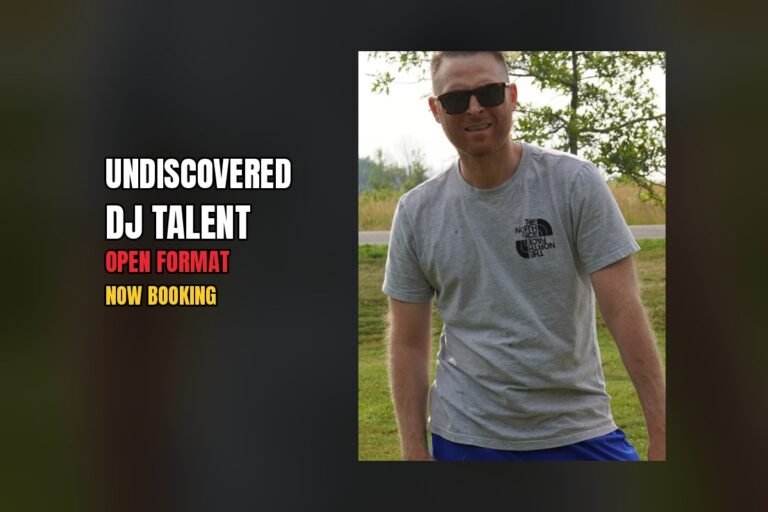
Booking · Nov 6, 2026
Undiscovered DJ and Producer Talent for 2026–2027 Lineups
Looking for undiscovered DJ and producer talent? An open-format DJ/producer with 340K+ YouTube views, booking 2026–2027.
Read →