- Bass house is house music with heavy, growling, bass-music style low end, usually 124-130 BPM.
- Its roots run through UK garage, speed garage and bassline; it took off as a festival sound in the mid-2010s.
- Key names include AC Slater (Night Bass), Tchami (Confession), Jauz (Bite This!), JOYRYDE and Habstrakt.
- Production in one line: a four-on-the-floor groove, a punchy kick, and a bass that does the talking.
Bass house is the sound of a house groove wearing dubstep’s boots. It keeps the steady four-on-the-floor pulse that makes people dance, then drops a bass line with the bite and movement of bass music. It is one of my favorite lanes to produce in. My track Supersonic is 128 BPM bass house.
What bass house is
Strip it down and bass house has three ingredients: house tempo and drums, a bass that carries the hook instead of a lead synth, and the energy of a drop-driven festival record. It usually runs between 124 and 130 BPM, with 128 the most common.
Where it came from
Ask producers about the roots and you get a family tree rather than a single birthday. Many point to UK garage, speed garage and the bassline scene, where wobbling, bouncing bass and house tempos already met. Some go further back to the late-90s Basement Jaxx sound. The name and the modern festival form took shape in the mid-2010s, when US and European producers started putting dubstep-style bass design over house drums, and labels and channels such as UKF started packaging it as its own genre. Beatport lists it as a separate genre today.
Artists and labels
| Name | Why they matter |
|---|---|
| AC Slater | Founder of Night Bass, one of the genre’s anchor labels and parties |
| Tchami | Runs Confession, pushing a heavier, darker take |
| Jauz | Brought the sound to main stages; runs Bite This! |
| JOYRYDE | Garage-rooted, hard-hitting tracks that shaped the festival version |
| Habstrakt | French producer known for aggressive, inventive bass design |
| Malaa | Masked producer whose records crossed into big rooms |
The sound, piece by piece
- Drums: four-on-the-floor kick, offbeat hats, claps on 2 and 4, often a swung, garage-style shuffle in the percussion.
- Bass: the star. Distorted, filtered, often “talking” or wobbling, with a clean sub underneath so the low end stays solid on big systems.
- Vocals: chopped, pitched or rap samples used as rhythmic hooks.
- Arrangement: DJ-friendly intro, a short build, a drop that leans on the bass, a second drop with a variation.
How bass house is made
Lock the kick and sub first
Pick a short, punchy kick and a sub in the same key. Sidechain or duck the sub to the kick so they never fight.
Design one strong bass sound
Start with a simple saw or square, add distortion, then move a filter or formant with an LFO or automation so the bass “speaks”. One great patch beats five average ones.
Write the bass like a lead
Short, syncopated phrases with gaps. The space between notes is what gives bass house its bounce.
Keep the top end busy, the low end simple
Hats, shakers and vocal chops give movement. Low end stays mono and clean.
Arrange for DJs
16-32 bars of drums to mix in and out, and an extended mix for DJs if you release a radio edit.
Mix check: play your drop next to a commercial bass house track at the same loudness. If your bass sounds bigger but the kick disappears, the kick and sub balance is wrong, not the bass patch.
Using bass house in a DJ set
Bass house sits right next to house and tech house at 124-128, so it slots into a house set to raise the intensity, and it hands off naturally to big room or, via a half-time drop, to dubstep and trap. See how the lanes connect in the BPM chart by genre, and hear the genre in my Supersonic (Extended Mix) and the originals.
FAQ
What BPM is bass house?
Most bass house runs between 124 and 130 BPM, with 128 the most common.
What is the difference between bass house and tech house?
Both use house tempos and four-on-the-floor drums. Tech house is groove-led and stripped back; bass house puts a heavy, distorted, bass-music style bassline at the center of the drop.
Who are the biggest bass house artists?
AC Slater, Tchami, Jauz, JOYRYDE, Habstrakt and Malaa are among the best-known names.
Is bass house the same as dubstep?
No. Dubstep is half-time music around 140-150 BPM. Bass house borrows dubstep-style bass sounds but keeps a house tempo and groove.
Sources: UKF, What the hell is bass house anyway? · Recording Arts, Bass House · Audiojacked, The Ultimate Guide to Bass House
// More guides
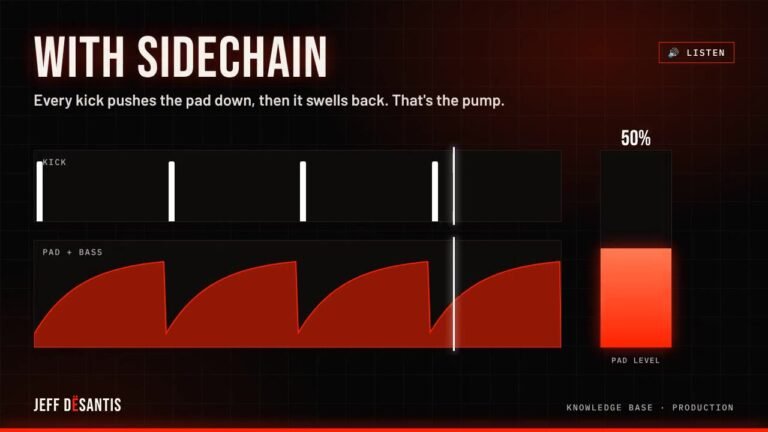 Music production · Video + audioSidechain Compression Explained: How to Get the EDM PumpHear the difference: what sidechain compression does, why every EDM drop pumps, and the four settings that control it.Watch & read →