- Sidechain compression lets one sound (usually the kick) turn another sound (bass, pads, the whole mix) down every time it hits.
- Used gently, it clears space so the kick punches through. Pushed hard, it becomes the “pumping” groove of house and EDM.
- Four controls do the work: threshold, ratio, attack and release. Release is where the groove lives.
- No sidechain input in your compressor? A tempo-synced volume shaper draws the same curve.
If you have ever wondered why a house or EDM drop seems to breathe with the kick, this is the trick. Sidechain compression is on almost every dance record I make, from subtle clean-up on the bass to the full, obvious pump on a drop. Watch the 40-second video with the sound on, then use the players below to hear it off and on.
Need the delay and release times? Use the free BPM to ms delay calculator to time your compressor release to the tempo.
Watch and listen
Without sidechain
Kick and pad fight for the same space.With sidechain
The pad ducks on every kick, then swells back.What sidechain compression is
A normal compressor turns a sound down when that same sound gets loud. A sidechain compressor listens to a different sound. Put the compressor on your bass, feed it the kick, and the bass dips every time the kick hits. That is why it is often called “ducking”.
The practical reason to use it: kick and bass live in the same low frequencies. If both play at full level at the same moment, the low end turns to mush. Duck the bass for a few milliseconds and the kick cuts through. The creative reason: exaggerate the effect and the dip-and-swell becomes a rhythm of its own.
The four settings
| Control | What it does | Starting point |
|---|---|---|
| Threshold | How loud the kick must be before the duck kicks in | Lower it until every kick triggers the duck |
| Ratio | How hard the target gets turned down | Around 4:1 for clean-up, much higher for an obvious pump |
| Attack | How fast the duck starts | Fast, so the dip lands with the kick |
| Release | How fast the sound swells back | Short and tidy for clean-up; longer and timed to the beat for pumping |
The groove lives in the release. Too short and the pad snaps back with a click; too long and it never recovers before the next kick. Set it so the sound is fully back just before the next beat, and the track starts to breathe.
Set it up in any DAW
Put a compressor on the target
The bass, the pad bus, or a group with everything except the kick.
Route the kick to the sidechain input
In most DAWs you pick the kick track as the compressor’s sidechain or key source. Some producers use a muted “ghost” kick so the pump keeps going when the real kick drops out in a breakdown.
Pull the threshold down
Watch the gain reduction meter move on every kick.
Dial ratio, attack and release
Fast attack, then tune the release while the track plays until the groove feels right.
Check it in the mix, not solo
The effect is about the relationship between sounds. Solo the bass and it sounds strange; in the full mix it should sound like it was always meant to move that way.
Try it in 10 minutes
Loop a four-on-the-floor kick and one long pad chord at 128 BPM. Sidechain the pad to the kick and sweep the release from very short to very long. Bounce three versions and listen back: you will hear exactly where it stops sounding mechanical and starts to groove.
Subtle vs. pumping
There are really two uses. Subtle: a couple of decibels of ducking with fast settings, so you never notice the compressor, only that the kick and bass sit better. Pumping: deep ducking on pads, chords, reverbs or the whole music bus, which you hear on purpose. Most of my drops use both: subtle on the bass, obvious on the chords.
If your compressor has no sidechain input, a tempo-synced volume shaper or LFO tool can draw the same dip on every beat. It is not triggered by the kick, so it will not follow fills, but for a steady four-on-the-floor it is easy and precise.
Next up: build the sound you are ducking with the wobble bass guide, or see where the pump hits hardest in the anatomy of a drop. Want to hear it on real records? My originals and remixes are full of it.
FAQ
What is sidechain compression in simple terms?
A compressor on one sound that is triggered by a different sound. In EDM, the kick usually triggers it so the bass or pads dip every time the kick hits.
Why does EDM pump?
Producers sidechain pads, chords or the whole music bus to the kick with deep ducking and a release timed to the tempo, so the music dips and swells on every beat.
What attack and release should I use for sidechain?
Use a fast attack so the dip lands with the kick, then tune the release by ear so the sound recovers just before the next beat.
Can I sidechain without a compressor?
Yes. A tempo-synced volume shaper or LFO tool can draw the same ducking curve on every beat.
Sources: iZotope, What is sidechain compression? · Sound On Sound, ducking with a fast attack and release · MusicRadar, How to sidechain your bass and kick drum · Native Instruments, Sidechain compression
// More guides
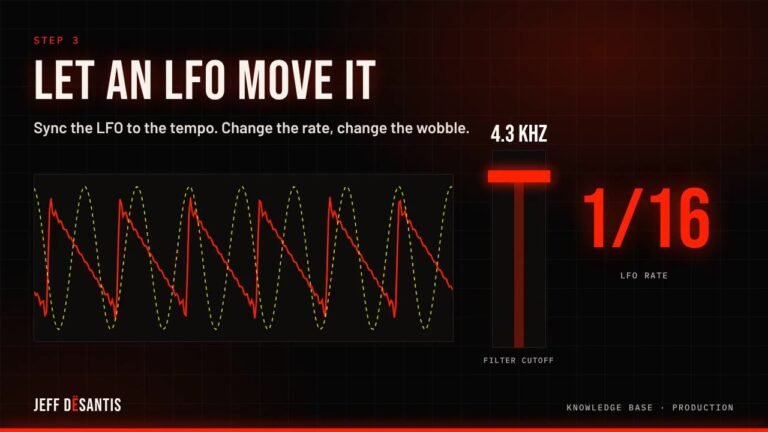 Music production · Video + audioHow to Make a Wobble Bass: Saw, Filter and LFO ExplainedThe three-part recipe behind dubstep wobbles, with a video and audio clips of every LFO rate from 1/4 to 1/16.Watch & read →
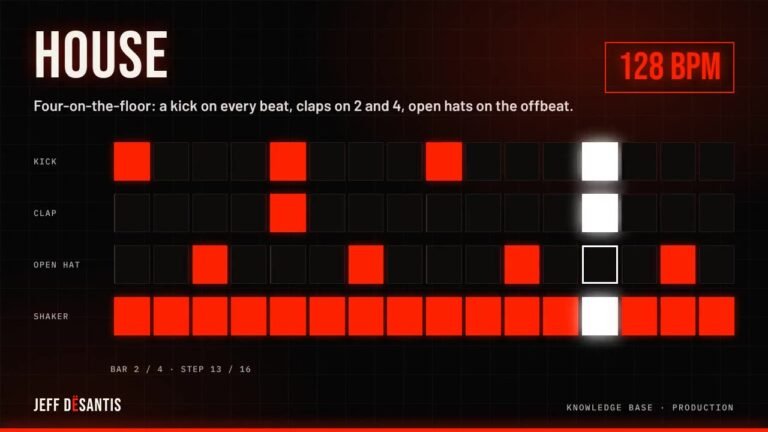 Music production · Video + audioDrum Patterns by Genre: House, Dubstep, Trap and MoombahtonThe 16-step drum patterns behind four genres, with a step-sequencer video and audio loops you can play.Watch & read →
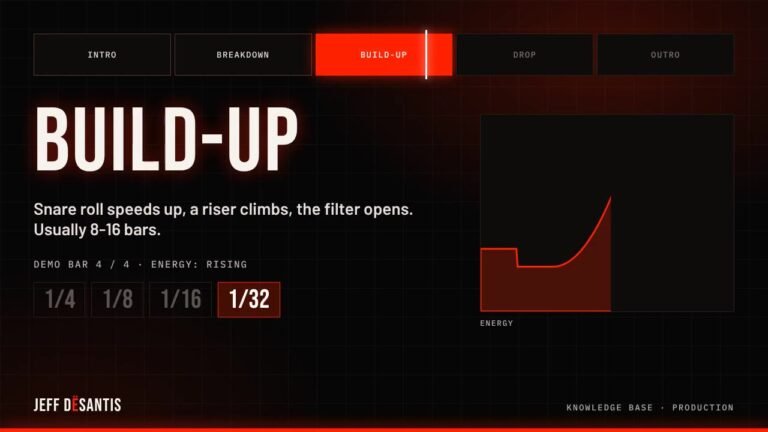 Music production · Video + audioAnatomy of a Drop: EDM Song Structure Bar by BarIntro, breakdown, build-up, drop, outro: hear every section in a 30-second demo and learn how many bars each one runs.Watch & read →